
Lubricants for Industrial Manufacturing
The manufacturing industry spans a wide range of sectors, and there is nothing really ‘general’ about any of them. From industrial manufacturer to precision plastics, the majority are highly diversified and vastly complex, often as a result of intricate machinery and demanding environments.
Throughout every subsector, however, one thing remains constant: the need for sustainable productivity. Maximum output, minimal impact, and optimum profit; all amidst technological changes and shifting conditions. Connecting these dots can be challenging, but the right partner can help take the complexity out of your operations.
In today’s competitive manufacturing landscape, efficiency, reliability, and sustainability are key to long-term success. From the lubricants you select to the services you engage, a well-thought-out maintenance strategy can not only help to maximise productivity in the short term but can also futureproof your business for years to come. Shell Lubricant Solutions empowers industrial manufacturers to unlock greater productivity, reduce equipment downtime and lower operational costs, and prepare for the future.
Shell delivers end-to-end support tailored to your production needs. Explore how our solutions can help your business thrive - today and tomorrow.
Read the transcript
Read the transcript
Title: Shell Lubricant Solutions | Unstoppable Manufacturing Brand Film
Duration: 1 min
Description:
Enter the world of Shell Lubricant Solutions, where precision, dependability, and innovation work in harmony to keep manufacturing in motion.
From Plastics and Metal Cans to Pulp & Paper, Tyres, Ceramics, Auto Components, Robotics, Chemicals, and Gear Motors — we work alongside industries to keep every component, every process, and every ambition moving forward.
See how our advanced lubrication technologies and technical know-how help manufacturers operate at their peak — ensuring smooth performance while respecting the world we share.
SLS Unstoppable Manufacturing Brand film Transcript
[Background music plays]
Light, upbeat background music fades in, setting an energetic and welcoming tone.
[Text displays]
It takes over 30,000 auto parts to bring people closer. (Auto Components)
It takes a specific plastic mould to help dreams take off. (Plastics)
It takes every refinery process to work in sync
for petrochemicals to create magic. (Chemicals)
It takes modern technology to rewrite history. (Pulp & Paper)
When each machine part does its job,
a metal can becomes part of a celebration. (Metal Can)
Spurs, bearings, shafts… it takes teamwork to build momentum. (Gear Motor)
For robotics to create wonders, it takes sophistication. (Robotics)
For crystals to turn into ceramic art, it takes expertise. (Ceramics)
It takes over 100 components… to get one tyre moving. (Tyre)
Product/Service Window VO:
For any manufacturing sector to be truly unstoppable, it takes persistence.
It takes proper lubrication.
At Shell, over 300 scientists constantly innovate to fuel your success.
Making us the world’s no. 1 lubricant supplier for 18 years.
With end-to-end solutions tailored for Manufacturing technical expertise across sectors, and a
vast network, we’re able to boost efficiency and unlock new opportunities, responsibly.
Shell Lubricant Solutions
Powering your journey to be unstoppable
Explore lubrications solutions for Industrial Manufacturing
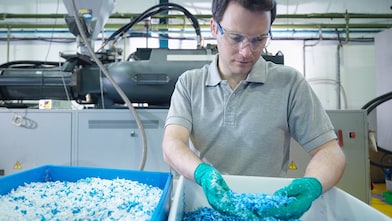
Plastics Manufacturing
Expert guidance plays a key role in improving efficiency across plastic injection moulding operations.

Automotive Component
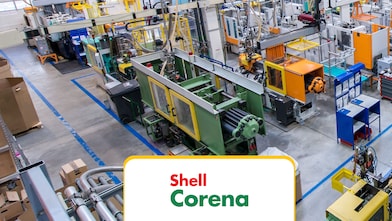
Our lubricants for automotive components are designed to help enhance the performance of your finished products and factory operations.

Metal Can Manufacturing
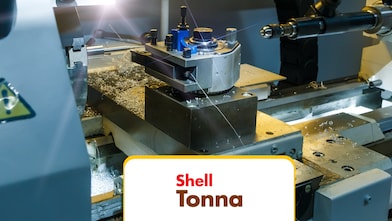
Unlock growth with high-quality lubricants for your metal can manufacturing plant.
Explore our Lubricants for Industrial Manufacturing


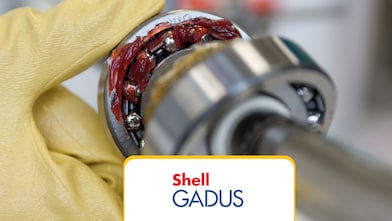
Discover our Services for Industrial Manufacturing

The Shell LubeAdvisor service is delivered through highly trained Shell technical staff consisting of office-based technical helpdesks and field-based lubrication engineers. In addition, there are a number of helpful and convenient tools for you to use, with the complete Shell LubeAdvisor service offering you a wealth of engineering, technical and application knowledge.