
Shell Silk Alkane:
Discover The Silk Spot
To meet the growing demand for high-performing beauty and personal care products, you want your formulations to have it all: sensory elegance, functional performance, application versatility and ready biodegradability1.
Finding ingredients for your beauty and personal care formulations requires a balance between consumer expectations, regulatory standards, and practical formulation considerations.
Discover Shell Silk Alkane—an excellent mineral-oil free and silicone-oil free option for emollience and conditioning effect for a wide range of skin and hair care formulations.
This innovative range of pharmaceutical-quality synthetic fluids is derived from our proprietary Gas-to-Liquid (GTL) technology. It’s highly pure, safe by design, readily biodegradable1 and low in ecotoxicity2. The exceptional purity and chemistry of the product range ensures compatibility with sensitive skin, delivers strong hydration, smooth texture, and a soft and silky feel for skin and hair applications.
1Shell Silk Alkane G3, Shell Silk Alkane G6 and Shell Silk Alkane G10 are readily biodegradable, biodegraded by over 60% after 28 days in the OECD 301B test. Shell Silk Alkane G 18 biodegraded by 59% after 28 days in the OECD 301B test, this meets the criteria for inherently biodegradable.
2 Low aquatic ecotoxicity, classified as "not harmful" to algae and freshwater invertebrates when tested in accordance with OECD test guidelines 201 and 202 meeting the requirements of EN 16807 (>100 mg/L for acute toxicity tests). Low terrestrial ecotoxicity classified as "not harmful" to earthworms when tested in accordance with OCED guidelines 222, meeting NOEC > 1000 mg/kg.)
Versatile across Applications
Enhancing the beauty & personal care industry through innovation and value:
Shell Silk Alkane products offer exceptional application versatility, making them ideal for a diverse range of beauty and personal care product formulation.
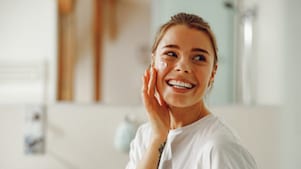
Skin Care
Increased moisturizing effect
– hydrates for soft, smooth skin

Sun Care
Enhanced skin barrier protection containing Sodium Lauryl Sulfate3

Hair Care
Reduction in split ends – healthier, smoother hair with fewer split ends
Reduced hair breakage –strengthens hair, reduces breakage 4

Cosmetics
Excellent smoothness and silkiness

Body Care
No sticky residue, skin-luminating, excellent slipperiness immediately after application
Lip Care
Glossiness without greasiness
Based on a study conducted by a Contract Research Organization with quality management system as certified by ISO 9001:2015 and Information Security Management System certified by ISO 27001:2013, both audited by SGS.
Following ISO 8586:2012 guidelines, fifteen trained panellists with proven sensory expertise were recruited to evaluate the Shell Silk Alkane range against other commonly used cosmetic emollients based on the ASTM E1490-19 standard for sensory analysis of skin creams and lotions.
3 Double blinded randomized controlled clinical study performed to evaluate the effect of this cosmetic product on the skin barrier. More data available in the Shell Silk Alkane Brochure.
4 Ex vivo test performed on similar formula, but without bisabolol. More data available in the Shell Silk Alkane Brochure.

Elegance & Performance
The high purity1 of Shell Silk Alkane enhances product stability and compatibility with other ingredients including actives, while its odour-neutral profile supports fragrance-free2 product formulations. With excellent spreadability, the readily biodegradable3 Shell Silk Alkane provides a versatile, innovative solution for a wide range of personal care and cosmetics products.

Ready biodegradability³
Shell Silk Alkane G3, Shell Silk Alkane G6 and Shell Silk Alkane G10 are readily biodegradable, biodegraded by over 60% after 28 days in the OECD 301B test.
Innovation that Matters
High purity
Pharmacopeia quality, low impurities, high stability against UV

Ready biodegradability³
Readily biodegradable3 due to its lightly branched molecules and the lack of naphthenic content

Virtually odourless
Supports fragrance-free product formulations

Synthetic
GTL technology ensures synthetic consistency, stable chemistry, predictable properties
1 High-purity paraffins with very low impurities, e.g., sulphur, olefins and polycyclic aromatics. Virtually no PAH and no MOSH & MOAH.
2 Supports fragrance-free product formulations. Can formulate without fragrance as our product is virtually odorless.
3 Shell Silk Alkane G3, Shell Silk Alkane G6 and Shell Silk Alkane G10 are readily biodegradable, biodegraded by over 60% after 28 days in the OECD 301B test. Shell Silk Alkane G 18 biodegraded by 59% after 28 days in the OECD 301B test, this meets the criteria for inherently biodegradable.

The Shell Silk Alkane Sensory Profile
Following ISO 8586:2012 guidelines, fifteen trained panellists with proven sensory expertise were recruited to evaluate the Shell Silk Alkane range against other commonly used cosmetic emollients based on the ASTM E1490-19 standard for sensory analysis of skin creams and lotions. The Shell Silk Alkane range leaves no sticky residue immediately after application, reflects a high amount of light from the skin, and provides excellent slipperiness. Five minutes after application, it delivers a smooth, silky after-feel.
Foundation of Future-Forward Formulating
Effectiveness across diverse personal care applications
Silk Alkanes deliver high performance from smoothing, hydrating, and protecting the skin barrier to taming hair frizz and reducing static, breakage and split ends.
From skin, sun, lip and hair care products to cosmetics and cleansers, Shell Silk Alkane’s broad viscosity range supports various product types while maintaining high performance.
Discover Shell Silk Alkane, a new generation of innovative ingredients that provide mineral-oil free and silicone-oil free options, along with emollience and conditioning effects, for a wide range of beauty and personal care products. Shell Silk Alkanes are dermatologically and clinically tested and are vegan verified1
World-class Gas-to-Liquids Technology
Shell Silk Alkanes are pharmaceutical quality ingredients which represent the premium choice for personal care and cosmetic product formulations.
They offer sensory elegance, functional performance, application versatility and ready biodegradability2. Derived from Shell’s Gas-to-Liquids (GTL) technology, these synthetic alkanes offer purity, are highly stable and are safe by design, making them ideal for a wide range of formulations. Shell’s commitment to innovation and excellence ensures that Shell Silk Alkanes provide a reliable, superior quality, innovative option for beauty and personal care products.
Frequently Asked Questions (FAQ)
Frequently Asked Questions (FAQ)
1. What is Shell Silk Alkane?
Shell Silk Alkane is designed to meet the increasing demand for high-purity and effective beauty and personal care ingredients. Shell Silk Alkane is a range of synthetic emollients derived from Shell’s proprietary Gas-to-Liquids (GTL) technology. It combines high purity, sensory elegance, functional performance, application versatility, and ready biodegradability1—ideal for next-generation beauty and personal care formulations.
2. What are the latest regulatory developments around cosmetic ingredients?
As the European Union prepares to implement regulatory controls around cosmetic ingredients, formulators are under increasing pressure to find compliant alternatives, to replace not only silicone oils, but also other ingredients that may come under scrutiny for their environmental impact and bio accumulative properties. At the same time, formulators cannot afford to compromise on performance or consumer expectations.
An immediate regulatory change is the ban on silicones in June 20262. Replacing silicones isn’t just about meeting regulations, it’s about maintaining the sensory experience, functionality, and versatility that consumers associate with high-quality personal care products.
With the beauty and personal care industry shifting towards more responsible and readily biodegradable alternatives, Shell Silk Alkane emerges as a versatile, high-performance substitute for commonly used emollients and with its soft and silky sensory profile and stability.
3. What makes Shell Silk Alkane safe by design?
- Pharmacopoeia quality
- Virtually free of Polycyclic Aromatics, Hydrocarbons (PAHs) and other aromatics
- Very low Volatile Organic Compounds (VOC) content
- Does not accumulate in biological tissues
- Well tolerated systemically
- Low hazard under under Classification, Labelling and Packaging (Commission delegated regulation (EU) 2023/707)
4. What are some properties of Shell Silk Alkane that make it the premium choice for beauty and personal care formulations?
- High purity - Pharmacopeia quality, low impurities, high stability against UV3
- Virtually odourless - Supports fragrance-free product formulations
- Readily biodegradable1 due to its lightly branched molecules and the lack of naphthenic content
- Synthetic - GTL technology ensures synthetic consistency, stable chemistry, predictable properties
- Vegan verified4
5. What are the main functional benefits of Silk Alkane?
- Skin care: Increased moisturizing effect – hydrates for soft, smooth skin
- Sun care: Enhanced skin barrier protection containing Sodium Lauryl Sulfate5
- Hair care: Reduction in split ends – healthier, smoother hair with fewer split ends, Reduced hair breakage – strengthens hair, reduces breakage6
6. What applications can Silk Alkane be used in?
Shell Silk Alkane products offer exceptional application versatility, making them ideal for a diverse range of beauty and personal care product formulations from skin, sun, body, hair, lip, nail care products, to cosmetics and cleaners. Shell Silk Alkane products offer multi-functional properties that can help streamline ingredient lists, reducing the number of SKUs needed and simplifying inventory management. This versatility not only enhances formulation efficiency but also supports the creation of high-quality, innovative personal care and cosmetic products.
7. How does Silk Alkane perform in sensory tests?
Shell Silk Alkane products leave no sticky residue immediately after application, reflects a high amount of light from the skin, and provides excellent slipperiness. Five minutes after application, it delivers a smooth, soft and silky after-feel7.
8. How can formulators access Silk Alkane and formulation guidelines?
Shell provides a detailed formulation guide and sample kits. Contact Shell Life Sciences for technical support, formulation advice, and to request test kits.
The Cautionary Note
Read full cautionary note at https://www.shell.com/investors/disclaimer-and-cautionary-note.html
1 Shell Silk Alkane G3, Shell Silk Alkane G6 and Shell Silk Alkane G10 are readily biodegradable, biodegraded by over 60% after 28 days in the OECD 301B test. Shell Silk Alkane G 18 biodegraded by 59% after 28 days in the OECD 301B test, this meets the criteria for inherently biodegradable.
2 https://eur-lex.europa.eu/eli/reg/2024/1328/oj/eng
3 High-purity paraffins with very low impurities, e.g., sulphur, olefins and polycyclic aromatics. Virtually no PAH and no MOSH & MOAH.
4 Chem-MAP, this product is free from animal DNA (mammals, birds, fish, insects, crustaceans, and molluscs), and produced in a facility that handles no animal-origin products to prevent cross-contamination.
5 Double blinded randomized controlled clinical study performed to evaluate the effect of this cosmetic product on the skin barrier. More data available in the Shell Silk Alkane Brochure.
6 Ex vivo test performed on similar formula, but without bisabolol. More data available in the Shell Silk Alkane Brochure.
7 Based on a study conducted by a Contract Research Organization with quality management system as certified by ISO 9001:2015 and Information Security Management System certified by ISO 27001:2013, both audited by SGS. Following ISO 8586:2012 guidelines, fifteen trained panellists with proven sensory expertise were recruited to evaluate the Shell Silk Alkane range against other commonly used cosmetic emollients based on the ASTM E1490-19 standard for sensory analysis of skin creams and lotions.
Featured Content- Beyond Regulatory Compliance: Shell Silk Alkane for Future-Proof Formulations
Discover the Silk Spot – Whether you're reformulating to meet regulatory deadlines or developing next-generation products, hear our speakers discuss how Shell Silk Alkane can support your innovation pipeline.
Read the transcript
Read the transcript
Title: Beyond Regulatory Compliance: Shell Silk Alkane for Future-Proof Cosmetics Formulations
Date: November 2025
Duration: {24:59} minutes
Description: A webinar recording about Shel Silk Alkane a readily biodegradable, multifunctional emollient designed to help formulators transition away from silicones and other synthetic emollients without compromising on product quality.
Beyond Regulatory Compliance: Shell Silk Alkane for Future-Proof Cosmetics Formulations Transcript
Introduction (Moderator)
Hello, everyone, and thank you all for joining us.
The views, opinions, and technical analysis presented during this webinar are those of Shell Life Sciences and are not necessarily those of UL.
The appearance of this content on UL sites does not constitute an endorsement by UL or its affiliates.
Today's webinar is Beyond Regulatory Compliance, Shell's Silk Alkane for Future-Proof Formulations, and is presented by Shell.
Your presenters today are Juan Carlos Carrillo,
Senior Toxicologist and Research Lead for Silk Alkane.
Juan Carlos has been with Shell since 2006 and brings deep expertise in regulatory science and ingredient safety.
He currently leads R&D for Shell's life sciences sector, which includes applications in cosmetics, animal health, and agricultural formulations.
And Antoine Germon, Global Business Development Manager.
Antoine has been with Shell since 2013 and leads global business development for Shell's Life Sciences Fluids portfolio.
He works closely with formulators and brand leaders in the personal care industry to help them solve complex formulation challenges, whether it's replacing restricted ingredients, improving product performance, or meeting evolving market demands.
My name is Derek Boettcher with UL and I'll be moderating today's webinar.
Please type your questions in the question box located on your screen.
We're recording today's event.
We'll send you a link by e-mail when it's been posted to LProsper.com.
Now I'll hand it over to Antoine to begin the presentation.
Presentation (Antoine Germon)
Welcome to all of you.
We are so glad to see all of the attendees to our very first Shell Silk Alkane webinar.
Thanks to all of you, ladies and gentlemen, for your interest and for sharing a bit of your time with us today. I'm Antoine Germain, based in Paris, France, and basically the global business director for Shell Life Science Fluids, which is the business division of Shell dealing with notably personal care ingredients, of course, as this is our topic today, but as well as with pharmaceuticals, agri-chemicals, and food contact applications.
Overall, all of the applications where our fluids will have an important biological and or toxicological impact.
As an introduction, I will answer a question that I'm sure all of you have announced, what a company like Shell is going to do in the personal care emollients field.
And that's indeed a very fair question that deserves a few lights.
So first, Shell was actually already present in Sears in the beauty and personal care market with surfactants.
Now we aim to increase our presence there, going to the emollients as part of a powering progress strategy, which includes powering lives.
We want to capitalize on our quite unique gas-to-liquid technology that enables offering to the world safer, cleaner, and affordable beauty and personal care products with no compromise on the efficacy aspects.
In other words, Silk Alkane is not only aiming to meet consumers' expectations and practical formulation needs, but also new environmental regulations, which is a key challenge to the beauty and personal care industry.
And I'm quite sure all of about what I'm referring to if I tell you about the European Green Deal coming in place in June 2026, with some restrictions on cyclic silicones, the linear silicones now going officially under scrutiny in Europe, or even China banning the D4, D5, D6 in the same way.
We recently heard about the potential stop the clock mechanism to come, but this does not
change at all the big direction the regulatory landscape is taking, but just giving the time to the market players to set things up in a correct and solid way.
That's what the today's session will be about.
And for that, I leave you with our best in class expert, Mr. Juan Carlos Carrillo, who is a highly experienced toxicologist and her personal care R&D lead globally, who will drive you through
the ongoing regulatory landscape and all the benefits that Shell Silk Alkane can bring to your formulations, but also to your respective companies at corporate level, talking about environmental features.
JC, the stage is yours.
Thank you, Antoine.
Presentation (Juan Carlos Carrillo)
Juan Carlos Carrillo, based in the Netherlands, and here very proudly presenting the new line of emollients that we call Silk Alkane.
And this line of emollients lies on 4 important pillars, elegance, performance, versatility, and biodegradability.
So we have balanced these four in order to give you the sweet spot, I mean the silk spot that make the core of this line of emollients.
Going back to what Antoine was mentioning about balancing the regulatory needs, but also the
the practicality in how to apply these emollients in formulations and also to balance the consumer needs.
Let me show you the following slide that summarizes where we depart from.
As it was indicated by Antoine, there is some scrutiny around silicone oils, in particular because of their biodegradation and environmental profile.
But this is not only restricted to silicones there are other ingredients that have a poor biodegradation profile and also could be faced with the same challenges and put under the magnifying glass of the regulator.
So, here is...
where our offer comes into place.
And this is just to give you an indication of how you can map the biodegradation profile of the different ingredients, different emollients, according to their typical biodegradation after 28 days.
So on the top, you have the natural oils, and followed by
the white mineral oils that already have a less favorable degradation profile, and so on, until you reach the ones that already have the regulatory target on it because of the poor biodegradation.
Now, silk Alkanes, they are close to the natural oil biodegradation profile, but not only that, they also have a lot of information that we supply
for example, in our safety material data sheet.
So from the slide, you can see that we have an example of one of the competitor emollients that has barely any information on the safety data sheet.
Whereas in our regulatory profiling of these emollients, we provide quite a significant amount of data.
that allows you to confidently indicate that these materials are readily biodegradable.
Sorry for my tongue twister there.
So what is what makes the GTL-based emollients, our silk alkanes, different?
One of the main features here is their high purity, then also virtually odorless.
So essentially they don't
they don't smell, and they're readily biodegradable profile, which I was indicating before.
And all of this is through a synthetic process that delivers the molecules right as we want them, in the correct carbon range, and also delivering different viscosities.
This is supported by our Shell Fischer-Trops technology that is supported by more than 3,500 patents.
And essentially what we do is we take natural gas, convert it through different synthesis steps into very clean isoalkanes, which are indicated also in the inky names of these substances.
Other aspects about their environmental profile is that they're well tolerated systemically.
It does not accumulate in biological tissues, and according to CLP classification, they are not classified.
Furthermore, we can guarantee their pharmacopoeia quality, and they are virtually free of polycyclic aromatic compounds.
So all in all, that makes a product that is essentially safe by design.
Now, I like this slide because this slide really says it all on the
Far left, we see the key features that I was mentioning, the high purity, the virtually odorless nature of the materials.
They are synthetic, they are vegan verified, and all of that rests on the assurance that they are readily biodegradable.
And then there are the other aspects that make the silt spot, that's their sensory elegance, the sensory profile that I will be talking about in the following slides,
their functional performance, for which I have a few examples, and their application versatility, how you can use them in different formulations.
So if we jump into the sensory elegance, all in all we can say that the Silk Alkane delivers a smooth, soft, silky sensation without leaving a sticky residue.
And here we have
a sensory profile where we are looking at the profile of the three silk alkanes, the G3, G6, and G10, that are presented as readily biodegradable.
And if you look at the top to, let's say, 12 o'clock to 6 o'clock, you have the sensory profile after immediate application.
And then from 6 o'clock, let's say, to 12, round the clock, you will see the same sensory profile, but after 5 minutes of application.
So one of the things that really sticks out is that they're non-sticky, that they're very smooth, then they're slippery, and they leave a glossy feeling that then fades after 5 minutes.
So this is
in itself already an interesting characteristic.
But the question is, how do they really compare to those materials that are now under regulatory scrutiny?
And that's when it gets really interesting.
Now let's see the comparison of G3 with cyclopentaciloxin, so D5.
So you clearly see from the chart on the left-hand side that it is very comparable
In its slipperiness, its non-sticky, and its smoothness, and after 5 minutes of application, well, those parameters that are not exactly the same, but it already gives you an indication where to place the G3 in comparison to.
to D5.
Certainly, there will be some adaptations you will need to do to your formulation, but this gives you already an indication that you're dealing with a non-sticky, highly slippery, smooth material that resembles what we call the silk sensation of the emollient.
Now, if we look to the right-hand side, we see the comparison to isohexadecay.
You may think that
It is not only silicones which are under scrutiny, but also other hydrocarbons that may be targeted because of their environmental performance.
Now here we have a similar comparison, where we are comparing the G3 to what is closest, let's say, to its sensory profile, and that will be very close to the slipperiness, non-stickiness, and smoothness of isohexadecane.
But the difference is that although they look quite similar in their sensory profile, the G3 is readily biodegradable, and that's a great advantage over that.
So we have here two examples of two molecules that could be targeted because of their regulatory scrutiny.
But now the question is, how does it compare to other solutions that may be already available?
One of these could be, for example, substituting with squalane.
I know that squalane is not quite the same as the D5 and isohexadicaine, but this is just to give an example of how silk-alkane compares to natural ingredients.
So in this case, we see how the three types of viscosities, the G3, the G6 in the middle, and the G10 on the right-hand side compare
to the natural alternative squalene.
And here the most closely resembling to squalene will be G10.
Almost identical profiles, but certainly you have a synthetic product that is very stable and it has all the other attributes I was indicating about their extremely low levels of pHs.
I'm not implying here that squalene has pHs.
But what I'm saying here is that you have a synthetic product that is very well characterized and very stable in its manufacturing process.
So you will always get that type of quality.
Now, if we move on, and we compared, let's say, to the old technology, mineral oil, which is well known to us, here, again, you see how the G3, G6, and G10 have been compared to mineral oil.
And similarly, you see some parameters that are quite close.
But compared to mineral oil, definitely shale silk alkanes have a much better biodegradation profile than the old technology.
So in summary, we have seen how the sensory profile of silk alkanes developed that silky, elegant feel, and also how it compares to the incumbents, which are now under scrutiny.
and also compared to a natural product and also to the old technology.
So really, silk alkene is somewhere right in the middle between the natural alternatives and the synthetics, but with a much better regulatory profile.
Now, what can we say about functional performance?
It's already
clear that we have certain advantages on the sensory profile, but now let's see how it performs when you put it in a formulation.
And here we will be exploring, for example, the improved moisturizing effect, the enhanced protection on the skin, anti-freeze effects, anti-static effects, and reduce hair breakage and split ends.
This is an indication of an assessment that was done
to check for the improvement on hydration.
In the chart, you see the G3, G10, and the G6 that were applied on human volunteer skins, and we see how they perform.
And they have been ordered according to their efficacy.
So after two hours, the G3 delivers the highest hydration, but it fades away after two hours.
The G10
is about 12% more efficacious in improving the hydration, but it fades away after four hours.
And then the G10 is the one that has the longest effect, but it is less effective, let's say, compared to the G3.
So clearly, the message here is that you have different viscosities,
and the different viscosities will have an effect, but the effect will have a different order of magnitude depending on the application that you're using it for.
Now let's go further on the performance on the skin.
This was an interesting experiment where the volunteers applied a cream
formulated with about 20% of silk alkane, and they applied it over seven days.
And after seven days, the skin where the cream had been applied was challenged with an irritant.
And what we can see is that after the skin irritation patch removal, after 24 hours and 48 hours, the silk alkane was quite comparable to the hemisqualane.
and the grapeseed oil, two natural emollient alternatives that indicate that you have a synthetic product that has a very good protection on the skin comparable to natural alternatives.
Now let's look at what happens if you put it on your hair.
When applied to the hair, and this is a different formulation, this is a formulation that consists almost entirely of silk alkane, we have a significant reduction, up to 70%.
We were able to reduce the split ends, and this is compared to a very well-known product that you may find already in the supermarket from a famous brand.
All in all, what is important here is that we can, with silk alkane, get the same results to already marketed products and to a significant effect to improve the reduction of split ends.
Similarly, also we can strengthen the hair by reducing the breakage.
And here we have a reduction of up to 84% compared to the same benchmark that we tested against also with the split ends.
So you have here a solution for improved hair protection only by using silk alkanes.
Not only that, you can also modify the formulation.
And here what we have is a two-phase hair conditioner, where we have up to 20% of silk alkane formulated compared to argan oil, hemisqualane, and B5.
I think the pictures say more than the graphs.
If you look at, let's say, between 9 o'clock and 12 o'clock, you have the hair threads that have been treated with the formulation containing silk alcaine.
Next to it, you have the argan oil, and immediately you see that the one that has the same formulation, but instead of having the silk alcaine, it has the natural argan oil, you see a much more greasy picture.
And then just below the Sil-Calkaine, between 6 o'clock and 9 o'clock, you see that with cyclopentaciloxane B5.
Very similar picture to the Sil-Calkaine, also in a 20% formulation, but the one with Sil-Calkaine gives you the additional benefit of being readily biodegradable.
So you have the same effect that you can achieve with a B5.
You have non-greasy look, but then you have this
additional benefit of being readily biodegradable.
And also with the hemisqualane, you can see that it looks quite similar, but the silcalkane is the synthetic product that has quite good stability and the additional benefits that I already mentioned.
Now, compared to the antifreeze effect, you have the negative control on the top left.
And just next to it, you have the one, the same formulation that was used for the anti-flyaway.
You have it for anti-freeze.
And again, you see the differences to argan oil that looks quite greasy and the solution with Senta D5 cyclopentaciloxane that could be somehow comparable, but you have much better effect with
silk-alkaine.
And with that, we already see the benefits that can bring when substituting incumbent ingredients with silk-alkaine, but also we can think about other products that could be formulated with silk-alkaine.
First of all, let me show you this graph.
I think it's quite interesting because it tells you that in order to achieve that function and that sensory feel, you would need to adapt the formulation.
Probably you can do it with one oil, but what we have done here is that we have developed an array of formulations.
And for that, we have our formulation guide here that tells you exactly how to do it.
And in what proportions you have to make the oils, you have to mix the oils in order to have a stable formulation, either if you're formulating in cold or in hot conditions, also the compatibility with commonly used surfactants and other ingredients to give you the benefits of Sylkalkane.
but at the same time give you a stable formulation that can be kept for an extended period.
And let's look, for example, at the skin and hair oil.
That skin hair oil that deliver less split ends and also less hair breakage.
This is composed almost entirely of silk alkane, but here you see the clear proportions of how it was mixed to have this look
and this field that was similar to the product in the benchmark product that is already commercialized.
And so on, you can look at the different formulations.
And if you take the last one, which is the moisturizing cream that has about 20%, you clearly see the split of the different oils in the right-hand side, where it's indicated how and in what proportions you have to use them.
Then if we have
here just an indication of what type of formulations are possible here.
We are not only presenting the formulations that are indicated here, but we are further developing our know-how in, for example, applying a formulation in shampoo.
It's quite interesting because shampoo consists of a lot of surfactants,
So for us, it was interesting to see how far you can take a formulation as extreme as a shampoo in combination with the silk alkane to leave then a nice after feel after you wash your hair.
And we are also doing it with different types of streams that would reduce the irritation of, let's say, surfactants.
This is still under development and we expect to show it soon.
But here is just an indication of other products that could be formulated with silk alkene.
To give you an example, the skin cleansing creams.
Also, we could have other products for hair styling and hair cleaning.
And very importantly, also products for sun protection.
We are also investing quite some resources in developing this knowledge.
on how to use silk alkane for this type of difficult formulations because of the challenges in solubilizing the UV filters and also get it into a formulation that is stable.
And with this, I hope I have brought you all the main aspects of the four pillars of silk alkanes, elegance, performance, versatility, and biodegradability that make the silk spot.
Thank you.
Elegance | Performance | Versatility | Ready Biodegradability2
Discover The Silk Spot
Shell Silk Alkanes represent the premium choice for cosmetic products due to its superior quality and consistency.
We have incorporated Shell Silk Alkanes into a wide range of cosmetic formulations - Experience it for yourself.
Made for Performance; Designed for Possibility
1 Vegan verification: Chem-MAP, this product is free from animal DNA (mammals, birds, fish, insects, crustaceans, and molluscs), and produced in a facility that handles no animal-origin products to prevent cross-contamination
2 Shell Silk Alkane G3, Shell Silk Alkane G6 and Shell Silk Alkane G10 are readily biodegradable, biodegraded by over 60% after 28 days in the OECD 301B test. Shell Silk Alkane G 18 biodegraded by 59% after 28 days in the OECD 301B test, this meets the criteria for inherently biodegradable.
* Subject to application suitability confirmation and availability.
Read full cautionary note at https://www.shell.com/investors/disclaimer-and-cautionary-note.html