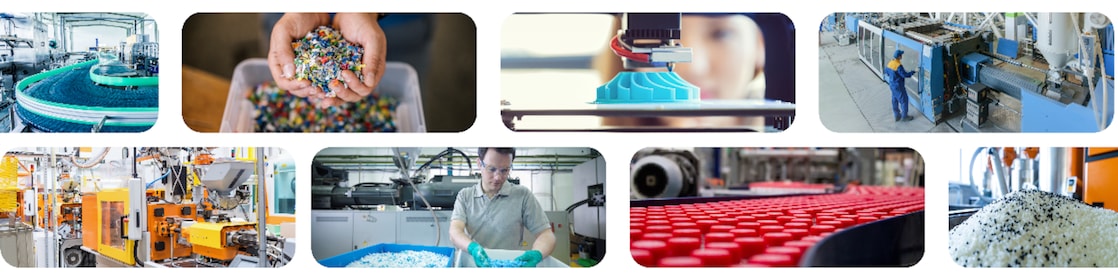
Lubricants for Plastics Manufacturing
Unlock the potential of plastics manufacturing - Don’t just prevent breakdown, perfect uptime
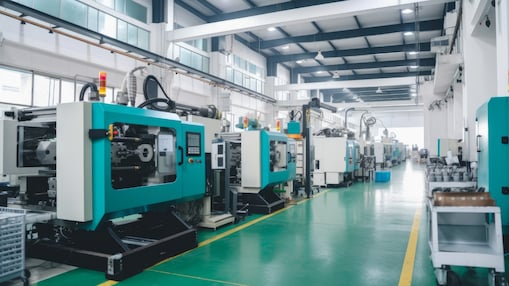
For plastic injection moulding operations, downtime can be costly. But focusing only on preventing breakdowns isn’t enough. When optimisation is overlooked, machines may run below peak performance for long periods-hurting cycle times, output quality, and ultimately your bottom line.
Proper lubrication doesn’t just protect against failures; it helps maximise efficiency. Improved energy performance means lower power consumption and reduced carbon emissions-supporting both cost savings and your sustainability goals.
Shell Lubricant Solutions provides the fluids and supporting services required to optimise equipment performance. Our hydraulic fluids have been trusted by leading OEMs for over 75 years. Our extensive range of OEM approvals spans multiple sectors and applications, offering compatibility and confidence where it matters most.
The productivity and efficiency boosts are hiding in your hydraulic oil
Lubricants do more than keep parts moving-they can help extend the life, boost productivity, and improve the reliability of injection moulding machines. They can even contribute to lowering a plant’s energy consumption.
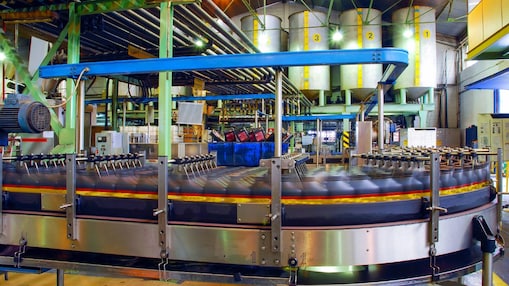
In injection moulding, hydraulic oil is the lifeblood of the machine, powering the system and keeping operations running-often around the clock. But in doing so, it faces tough conditions: high pressure, temperature swings, and exposure to contaminants like water and air.
Why high-quality hydraulic oil matters
A good hydraulic oil does more than keep your system running - it protects high-precision components and stands up to tough challenges like wear, corrosion, leaks, oxidation, thermal breakdown, and the build-up of sludge and varnish.
Because hydraulic oil represents only a small part of the maintenance budget, it’s easy to overlook. But investing in a high-quality oil can deliver significant long-term savings when you consider Total Cost of Ownership (TCO)-the full cost of equipment over its lifetime, including both purchase and operating expenses.
To help customers manage TCO and meet the demands of modern hydraulic systems, Shell’s global technical experts work closely with leading OEMs to develop the Shell Tellus range of hydraulic oils. These oils are designed to keep pace with evolving system designs and deliver:
- Trusted wear protection for high-precision components
- Higher energy efficiency, reducing energy loss from hydraulic pumps
- Extended oil life, including varnish prevention-up to 40,000 operating hours
Reducing costs and improving energy efficiency
Selecting the right lubricant, together with harnessing support from specialist technical services such as Shell LubeAnalyst, is critical for improving productivity and helping to realise significant TCO savings. It can also deliver energy savings and a resulting reduction in carbon emissions, which can contribute towards your company’s sustainability targets.
The Critical Role of Hydraulic Oil
Download our infographic to discover the four critical benefits that an effective hydraulic oil can have for your business (PDF, 225 kB).
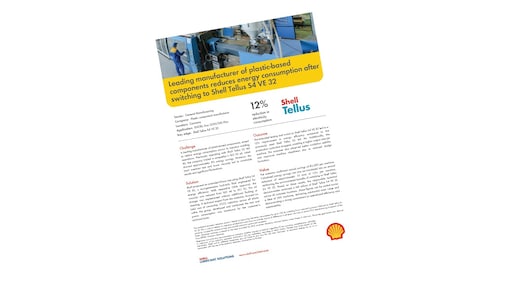
Sludge and varnish: The hidden productivity killers of injection moulding operations
For plastic injection moulding, productivity is a priority. Any unplanned downtime caused by equipment breakdown impacts directly on your bottom line, placing delivery deadlines at risk and incurring costs from maintenance and unused labour.
At the heart of these machines is the hydraulic system, and the hydraulic fluid plays a vital, often overlooked role. Up to 70 per cent of mechanical failures are linked to ‘improper hydraulic fluid condition’, often caused by sludge and varnish build-up.
The challenge? Standard Oil Condition Monitoring (OCM) tests can spot issues like corrosion, but they don’t detect sludge and varnish, because these soft contaminants don’t change the fluid’s bulk chemistry. That means problems can go unnoticed until equipment fails, leading to costly downtime and oil changes. Short oil-drain intervals add even more expense, not just for the oil itself but for disposal and waste management.
Poor-quality hydraulic fluids can make this worse. They oxidise easily when exposed to metals, water, and air, and their additives break down under high temperatures, creating conditions for sludge and varnish to form.
Avoiding unplanned downtime and unexpected costs One of the simplest ways to keep your equipment running smoothly and avoid costly surprises is by choosing a high-quality hydraulic fluid. The right fluid helps prevent harmful deposits like sludge and varnish, which can lead to breakdowns, while also reducing overall operating costs (operator’s Total Cost of Ownership).
The Shell Tellus range is designed to meet the needs of modern hydraulic systems by:
- Standing up to heat and stress
- Keeping systems clean and reliable
- Reducing the risk of failures and the expenses that come with them
Using a high-quality hydraulic fluid with strong resistance to oxidation and heat can help your equipment stay cleaner, run longer, and cost less to maintain.
* Total Cost of Ownership (TCO) is defined by Shell Lubricants as the total amount spent on industrial equipment, including cost of acquisition and operation over its entire working life, including costs of lost production during equipment downtime.

Maintaining Peak Performance
The three most important building blocks of success for plastic injection moulding operations?
Explore our Lubricants for Plastics Manufacturing
Shell Tellus – Hydraulic Oils
Shell Tellus fluids are designed to provide robust protection for your Shell Tellus system and help you to reduce incidence of equipment failure.
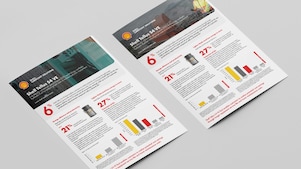
Shell Tellus S4 VE
Find out how you can extend equipment life, lower your maintenance costs and boost hydraulic performance with the latest oil technology.
Shell Corena - Compressor Oils
Explore our range of Shell Corena compressor oils, proven to help reduce your operational costs without compromising protection.
Shell Omala – Gear Oils
Keep your gears turning with Shell Omala gear oils that meet the demands of the most advanced OEM gearbox designs.
A real-world example
Pilsa Plastic Products Inc.
The Challenge:
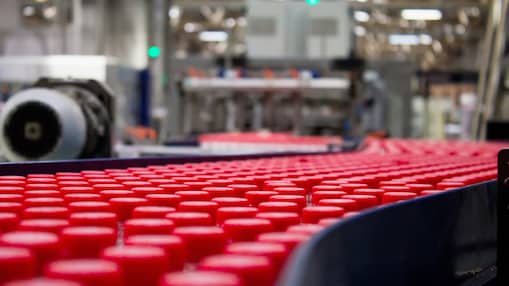
Pilsa Plastic Products Inc., a leading plastic manufacturer in Turkey, was facing issues with their compressor lubricant. The oil analysis showed that the lubricant didn't have the required thermal and oxidation stability. As a result, the company had to change the oil every 5,000 hours, which increased maintenance costs and reduced operational efficiency.
The Solution:
After closely monitoring and analyzing the performance of the existing oil through the Shell LubeAnalyst Oil Condition Monitoring (OCM) program, the Shell technical team identified an opportunity for improvement. They recommended switching to Shell Corena S4 R 68, a high-performance lubricant designed to enhance efficiency and reduce maintenance. Additionally, the team provided comprehensive training on proper handling and application, ensuring a smooth transition and optimized performance moving forward.
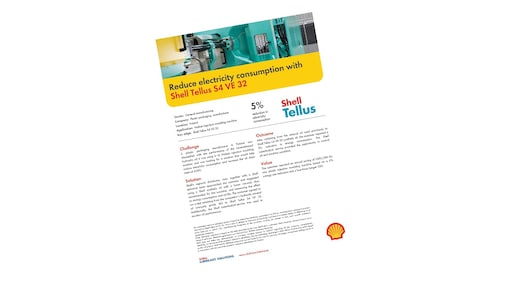
Using Shell Corena S4 R 68 led to a 50% reduction in operational costs and doubled the oil-drain intervals from 5,000 to 10,000 hours. This, combined with lower oil consumption, reduced labor costs, and less oil waste, resulted in annual savings of $12,185.1
1 Please note, these savings are specific to the current site and calculation date, and may vary depending on factors such as application, operating conditions, equipment condition, and maintenance practices.
Discover our Services for Plastics Manufacturing
The Shell LubeAdvisor service is delivered through highly trained Shell technical staff consisting of office-based technical helpdesks and field-based lubrication engineers. In addition, there are a number of helpful and convenient tools for you to use, with the complete Shell LubeAdvisor service offering you a wealth of engineering, technical and application knowledge.